Saudi Digital Transformation Surpasses 90% Mark, Yields SAR26 Billion in Annual Savings
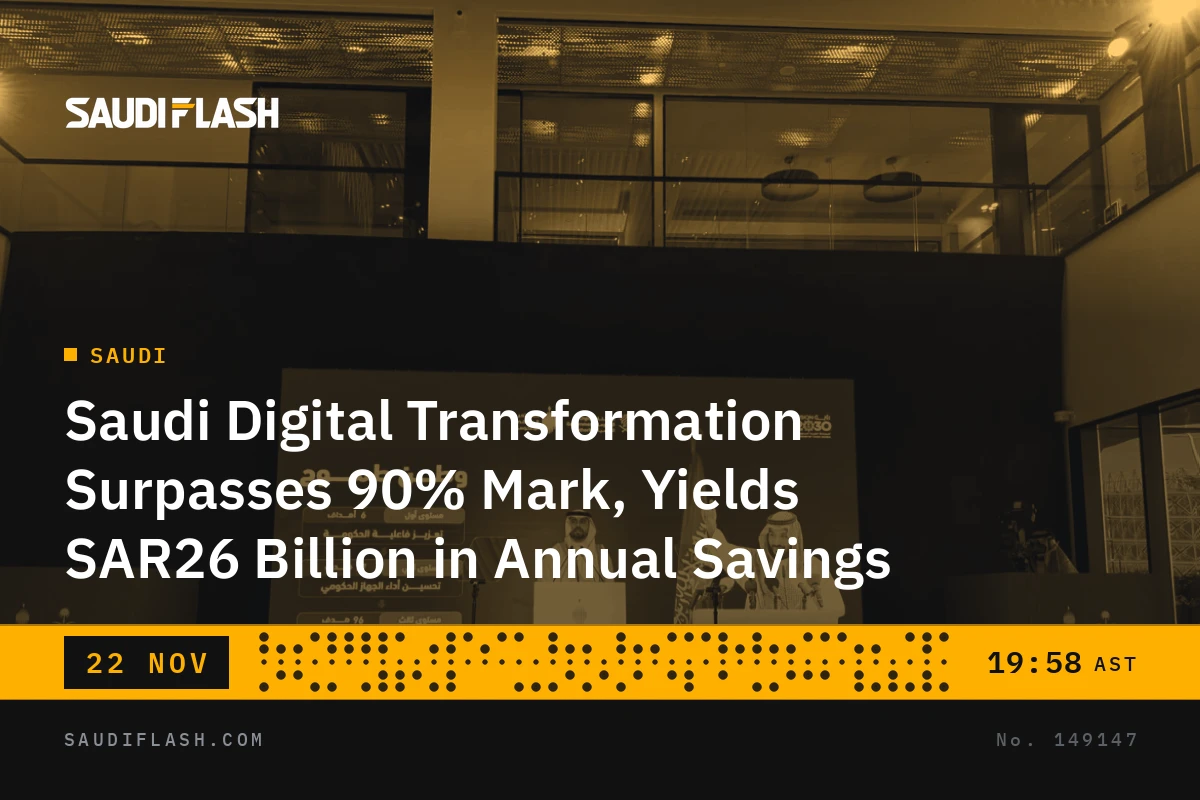
At a Ministry of Media press conference in Riyadh, Saudi Digital Government Authority Governor Eng. Ahmed Alsuwaiyan outlined the Kingdom’s digital transformation milestones, stating the transformation rate is projected to exceed 90 percent by the end of 2026. These advances have produced annual savings exceeding SAR26 billion and removed more than 1.3 million daily in-person visits through digital service delivery, he said.
Government Services Accelerated
Alsuwaiyan highlighted the Ministry of Interior’s Absher platform, which has accelerated transactions, simplified procedures, and improved user experience. Services that once required four hours can now be completed in 30 seconds, he noted.
The Tawakkalna application now provides access to over 1,800 government services, processing more than 88 million transactions daily. Electronic payments account for 85 percent of all financial transactions, customs clearance takes just two hours, and procurement of goods and services has been shortened to two days, he reported.
Read also: SAP urges Saudi employers to rethink talent strategy as AI transforms roles
Judicial and Pilgrimage Platforms Transform
In the judicial sector, 95 percent of court sessions are now held remotely via virtual courts, cutting the duration of proceedings from 219 days to 20 days and eliminating over 60 million annual visits to court facilities, according to Alsuwaiyan.
For pilgrims, the Nusk platform has attracted more than 60 million users, while Al-Rawdah Al-Sharifah at the Prophet’s Mosque welcomes 55,000 visitors daily. Hajj and Umrah visa issuance has been reduced to five minutes from five days, with more than 22 million visas expected to be issued by 2025, he added.
Read also: Saudi HR Ministry Updates Penalties for Support Labor Sector Violations
Healthcare, Energy and Charity Gains
Healthcare has seen 51 percent of medical appointments shift to remote delivery, and medication dispensing time has dropped to under eight minutes from 72 hours, generating SAR1.5 billion in medication cost savings, Alsuwaiyan said.
Leveraging artificial intelligence, the Ministry of Energy has cut the time to process and monitor oil and gas supplies to 30 seconds from 25 minutes, Alsuwaiyan noted.
Read also: IFS expands industrial AI push in Saudi Arabia with new tools and Riyadh headquarters plan
The Ihsan donation platform has collected SAR17 billion through more than 390,000 transactions. The domestic worker recruitment request service now takes eight minutes and no longer requires in-person visits to social insurance offices, he said.
Regulatory Framework Drives Global Ranking Rise
Alsuwaiyan emphasized the role of national regulations and technical standards in advancing digital services and government performance. The digital transformation measurement index rose from 69 percent in 2021 to over 90 percent by the end of 2026. Visual pollution monitoring costs fell 76 percent, and groundwater sustainability services yielded SAR120 million in savings, he added.
These achievements have lifted Saudi Arabia’s ranking in the UN E-Government Development Index from 52nd place in 2018 to fourth among 194 countries in 2026, moving the Kingdom closer to its Vision 2030 goal of ranking among the world’s top five in e-governance, Alsuwaiyan concluded.
More in Saudi